


Geotechnical field tests
Geotechnical investigative works at the required location are conducted using the following equipment:
- Mechanical exploratory drilling with soil and rock sampling for geotechnical investigations enables the collection of samples from various depths. This is crucial for analyzing the stratification of soil and rock and assessing their mechanical properties.
- Exploratory drilling by soil auger with soil sampling for geotechnical investigations is used for shallower drilling and inaccessible locations, providing information about the surface soil layers.
- Standard Penetration Test (SPT) is a method used to determine soil resistance to penetration, helping assess soil bearing capacity and its deformation characteristics.
- Soil compaction testing with a Light Drop Weight Tester and Plate Load Test allows the assessment of soil compaction and bearing capacity. The preparation of a geotechnical report after these tests provides detailed information necessary for further engineering solutions.
- Field CBR testing with a dynamic cone penetrometer (DCP) is used to evaluate soil strength and bearing capacity. The results of these tests are essential for the design of foundations and other infrastructure projects, and the preparation of a geotechnical report documents all findings.
When are field geotechnical investigations used?
Field geotechnical investigations are used at various stages of construction projects as the basis for geological investigative works and engineering studies. These investigations provide reliable information about the properties of soil and rock masses at a specific location.
Preparatory works during design
When planning and designing construction projects such as buildings, bridges, roads, tunnels, and dams, it is essential to obtain data on soil bearing capacity, slope stability, landslide risks, and other relevant terrain characteristics. These data are crucial for creating safe and economical constructions.
During construction and legalization of structures
For determining the type and dimensions of building foundations, soil tests help determine the bearing capacity and deformability of foundation soil. Geomechanical investigations for the legalization of structures are performed using a drilling machine or probe drilling equipment, especially if the terrain is unsuitable. Legalization of a structure requires accurate data on geological conditions to ensure the stability and safety of the building.
Slope stability
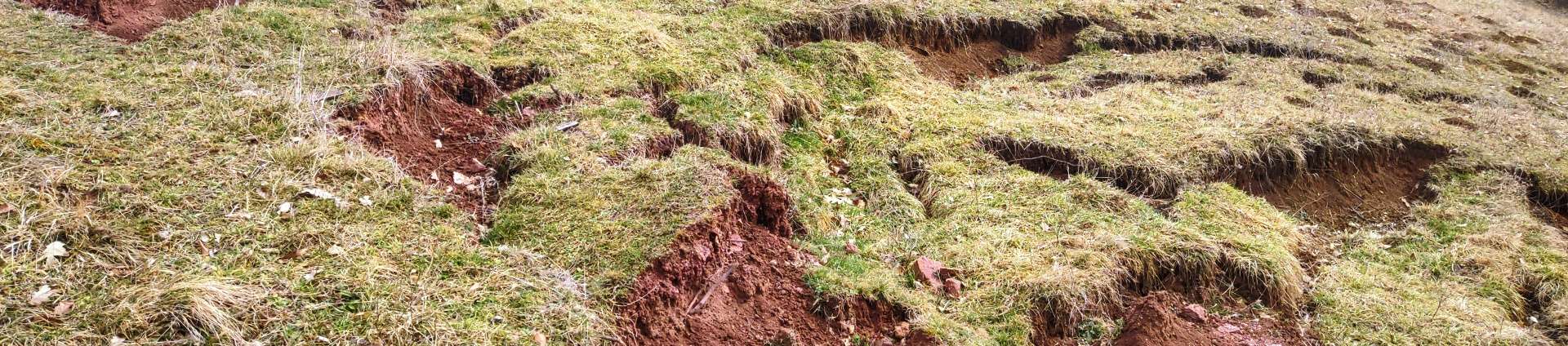
In areas with naturally steep slopes or terrains with planned excavations, geomechanical investigations help assess slope stability and landslide risks. These investigations are necessary for planning stabilization measures and preventing potential landslides, which is crucial for infrastructure and population safety.
Construction of various infrastructure projects
During the construction of roads, railways, airports, and other infrastructure projects, soil tests are essential for understanding soil conditions and behavior under load. Field geomechanical tests with a light falling weight, dynamic cone penetrometer, and static circular plate can be used during the planning, design, and construction phases of transportation routes. The application of these tests according to the standards prescribed by the Institute for Standardization of Serbia ensures that testing methods and result interpretations comply with international norms. The most common application is during soil compaction testing at locations where a specific load is planned, and the quality of the material incorporated into road, railway, and other linear structures can also be determined.
Groundwater investigation
For projects involving groundwater investigation or where there is a risk of groundwater, tests help determine the groundwater level, soil permeability, and impact on structure stability. These data are essential for designing drainage systems and protecting structures from groundwater.
Mining and geological studies
In the mining industry, soil and rock mass tests help plan exploitation works, ensure work safety, and assess mineral reserves. Detailed geological investigations enable optimal use of mineral resources and minimize environmental impact.
Terrain remediation
In cases where damage, terrain instability, or soil displacement has occurred, field investigations help plan remediation measures and stabilize the terrain. These data are crucial for creating effective solutions for stabilizing and reconstructing damaged areas.
Studies of enviromental hazards
In areas prone to earthquakes, floods, or other natural disasters, tests help assess risks and plan preventive measures. Based on these studies, strategies can be implemented to reduce risks and increase infrastructure resilience to natural disasters.
In conclusion, geotechnical investigations and field geomechanical tests are essential for any construction project. They provide a detailed understanding of geological conditions at the site, which is crucial for the safety, stability, and success of any project. From planning and design to construction and remediation, these processes ensure that all aspects of the construction project are carefully examined and documented, determining potential risks and optimizing performance.
.JPG "Geotechnical field tests")
.jpg "Geotechnical field tests")
.jpg "Geotechnical field tests")
.jpg "Geotechnical field tests")
.jpg "Geotechnical field tests")
.jpg "Geotechnical field tests")